
Intuition is not a rare gift, it is a language you can learn to listen to

We hear it all the time
Listen to your intuitionTrust your gutYour intuition already knows the answer
But almost nobody explains one fundamental thing
How do you actually listen to it?
When you are calm, it can be relatively easy to feel that something is right for you
The real challenge begins when you are tired, emotionally involved, under pressure, in love, angry, afraid or simply when your mind refuses to stop thinking
In those moments everything starts speaking at once
Fear speaksDesire speaksOther people’s expectations speakMemory speaksThe need for control speaks
And somewhere underneath all that noise, your intuition has not disappeared
It has simply become harder to hear
Intuition does not belong to a chosen few
Intuition is often presented as a special ability, almost like a mysterious talent that some people possess and others do not
I see it differently
For me, intuition is a natural form of perception
It is that moment when your body, your sensations and a deeper level of awareness register something before your rational mind has managed to build an explanation for it
It may appear as a feeling in your stomach
An opening in your chest
A sudden sense of calm
A resistance you cannot quite explain
Or simply that quiet feeling of knowing
Intuition does not need to be spectacular
In fact, it is often much simpler than thought
The mind arguesIntuition points
The problem is not having intuition, it is being able to hear it
When we are overloaded, listening becomes more difficult
Imagine trying to hear someone whispering to you while ten conversations are happening around you, music is playing and traffic is passing outside
The voice is still there
There is simply too much noise
Something similar can happen inside us
When the body remains tense, breathing becomes shorter and we keep analysing the same situation again and again, our attention is naturally captured by whatever feels urgent, threatening or emotionally intense
This is why simply saying trust your intuition can become almost useless advice if we do not first learn how to create enough space to recognise it
Intuition, fear or desire?
Perhaps the most important question is not
What is my intuition telling me?
But
Who is speaking inside me right now?
Fear can be persistent and wants an answer immediately
Anxiety creates scenarios
Desire can transform what we hope for into what we believe we are perceiving
Intuition often has a different quality
It is not necessarily pleasant and it does not always tell us what we would like to hear
But it is often simpler
Less noise
Fewer explanations
Less need to convince ourselves
Learning to recognise this difference takes practice
How do you train your intuition?
You do not necessarily need to become more spiritual
You need to become more present
You can begin by observing what happens in your body when you say yes and what happens when you say no
You can give yourself small moments without stimulation, without your phone, without immediately asking other people what they think, without desperately searching for an answer
You can remember all those moments when you sensed something before you rationally understood why
Little by little, you begin to build your own personal vocabulary
For one person, yes feels like an opening in the chest
For another, it feels like calm
For someone else, it may simply feel like the absence of the resistance they were previously feeling in their body
There is no universal dictionary of intuition
You have to learn your own
And what happens when the mind is too noisy?
This is exactly where the body becomes interesting
We spend so much time searching for clarity in the same place where all the confusion is being created
The mind
We think more
We analyse more
We replay conversations
We imagine scenarios
We look for signs
We ask for opinions
We try to find the perfect decision
But thinking more does not necessarily mean seeing more clearly
Sometimes we need to interrupt that cycle and bring our attention back to the body
Breathe
Feel
Perceive
Allow something to slow down
Not because the body magically holds all the answers, but because when the noise becomes quieter we may begin to distinguish more clearly what we are actually feeling
Why I created Intuitiva
This is exactly where Intuitiva comes from
It is not a session designed to tell you what you should do, nor is it meant to replace your intuition with mine
It is a space where I use my intuitive perception to work with the body and the energetic field, supporting balance, presence and inner listening
Through bodywork, energetic work and intuitive perception, attention can slowly begin to move inward again
Because when the body slows down and some tensions begin to soften, it may become easier to recognise what you actually feel
Sometimes an answer emerges
Sometimes a better question emerges
Sometimes something that seemed incredibly complicated suddenly appears much simpler
And sometimes you simply stop chasing a solution
That too can be clarity
The answer does not necessarily have to come from outside
For me, intuitive work is not about replacing your perception with mine
It is almost the opposite
During Intuitiva, my intuition becomes a tool through which I observe where the body seems to be asking for attention, where I perceive more tension and where it may be useful to create space
But ultimately, this is about you
My role is not to become your inner guide
It is to help you hear your own more clearly
Because perhaps the real meaning of listen to your intuition is not learning to receive louder and louder signs
Perhaps it means becoming quiet enough to recognise the ones that were already there
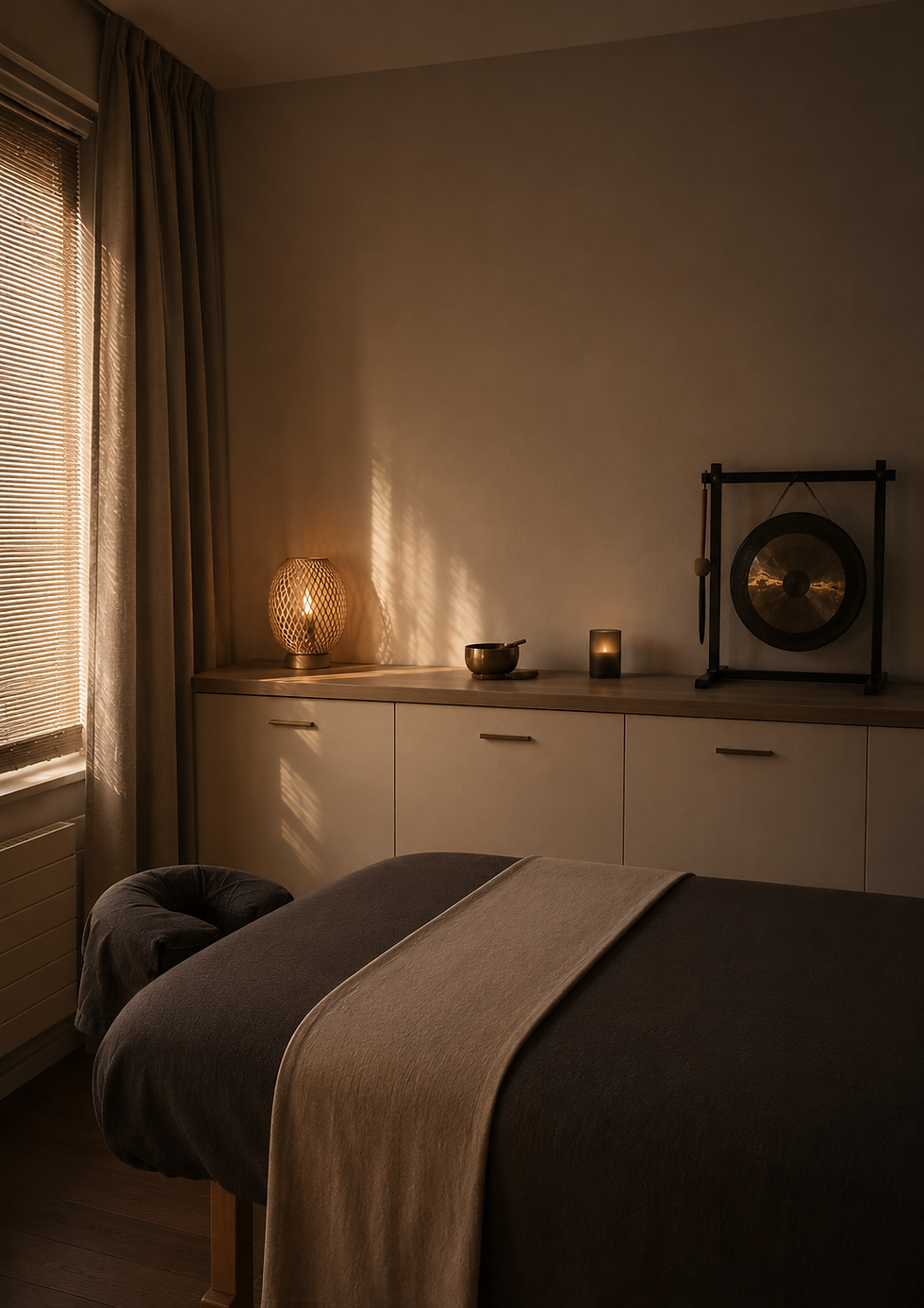
Intuitiva · 120 min · Bern
An intuitive and energetic bodywork session to reconnect with presence, inner awareness and clarity


Comments